If your foot or ankle pain has plateaued—despite rest, stretching, inserts, or basic physical therapy—Extracorporeal Shockwave Therapy (ESWT) may be the next step to stimulate tissue remodeling and help you move forward again.
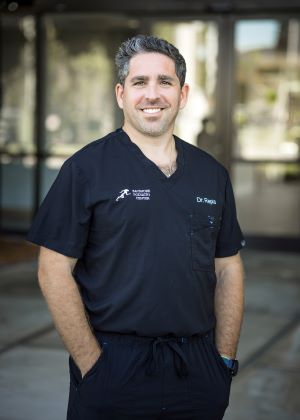
At Bayshore Podiatry Center in South Tampa, Dr. James E. Repko, DPM, DABPM and Dr. Saleena Niehaus, DPM, DABPM use focused (focal) shockwave and radial pressure therapy as part of a structured, evidence-based plan. Our approach is straightforward: confirm the diagnosis, identify the mechanical drivers, match the energy to the tissue, and build a plan that holds up long-term.
Schedule Your Shockwave Consultation Today
The Clinical Reality of “Chronic” Pain
Many persistent foot and ankle problems aren’t “just inflammation.” After weeks to months of symptoms, tissues often become degenerative and disorganized (think: thickened, stiff, scar-like change). That’s why the usual first-line options—rest, stretching, ice, and anti-inflammatories—can stop working.
Shockwave therapy is designed for this “stuck” stage. It delivers acoustic energy to the affected area to help restart a healing response and support remodeling—especially when paired with load management and a targeted rehab plan.
What Is Shockwave Therapy (ESWT)?
ESWT is an in-office, non-surgical treatment that uses acoustic waves to stimulate a biologic response in chronically irritated tissue. It’s commonly used for conditions like chronic heel pain and tendon pain that have not responded to basic conservative care.
What it’s not: a magic reset button.
What it can be: a powerful “reboot” for the right diagnosis at the right time—when the plan also addresses the mechanical stress that caused the problem in the first place.
Why Our Approach Is Different: Focused + Radial Technology
Chronic pain is rarely isolated to one tiny spot. When you’ve limped for weeks or months, your body develops compensation patterns that overload surrounding structures.
That’s why we use a Curamedix system that provides both:
Focused (Focal) Shockwave
Targets deeper, localized tissue pathology—such as a specific area of fasciosis or a tendon insertion problem—with high-precision acoustic energy.
Radial Pressure Therapy
Treats broader, more superficial regions and is often used to address the surrounding soft tissues that become irritated from compensatory gait patterns.
This combination lets us treat both the primary pain generator and the support system around it, instead of chasing symptoms.
Conditions We Commonly Treat With Shockwave Therapy
Shockwave therapy is versatile, but it’s not interchangeable across every diagnosis. Results depend heavily on tissue stage, location, and mechanical load.
Chronic Heel Pain (Plantar Fasciosis / Fasciopathy)
When stretching and basic care haven’t worked, the issue may be degenerative change within the plantar fascia rather than short-term inflammation. ESWT can help stimulate remodeling in these “stuck” tissues.
Achilles Tendon Pain (Insertional & Midportion)
The Achilles tendon is prone to persistent pain because of repetitive load and limited blood supply in certain regions. ESWT can be helpful for both insertional and midsubstance problems—especially when paired with smart load modulation and progressive strengthening.
Tendon Insertions & Entheseopathies
Selected cases of posterior tibial tendon pain, peroneal tendon pain, and other tendon insertion problems can respond well when the diagnosis is confirmed and the mechanical driver is addressed.
Joint Stiffness & Arthritis (Including Big Toe Arthritis / Hallux Rigidus)
For some patients with joint pain and stiffness, shockwave may help reduce pain sensitivity and local soft-tissue stiffness—often as part of a broader plan to improve function and delay or avoid more invasive options.
The Bayshore Staged Protocol
We don’t do “wait and see” when the problem has clearly stalled. We use a structured escalation plan.
1) Diagnostic Baseline
Most patients start with a clinical exam and weightbearing X-rays. We frequently use diagnostic ultrasound to assess tissue quality (thickening, degeneration, tearing, calcification) and help confirm the pain generator.
2) Staged Escalation
If you’ve had symptoms for months—or you have not made meaningful progress after a focused trial of conservative care—we discuss whether a structured shockwave series makes sense.
3) Treatment Series
Most patients complete 4–6 sessions, typically spaced about one week apart. Some conditions improve sooner; others require a longer runway depending on chronicity, tissue quality, and load demands.
4) Integrated Care
Shockwave is rarely a standalone fix. It works best when paired with:
-
Load management (activity modification without full shutdown when possible)
-
Progressive strengthening / rehab
-
Footwear changes when needed
-
Custom orthotics in the right candidates
-
MLS laser therapy in select protocols
What to Expect During Treatment
-
Time: Sessions are typically brief and performed in the office.
-
Sensation: You may feel tapping, pressure, or discomfort at the treatment site. We adjust settings to keep it tolerable while still effective.
-
Activity: Most patients can continue routine daily activity as tolerated. Running and other high-impact training may need temporary modification based on your diagnosis, tissue stage, and response to treatment.
-
Progress: Improvement may be gradual and can continue over the weeks after treatment. Response and recovery time vary; improvement is not guaranteed.
Candidacy: Who Tends to Do Well With ESWT?
You’re more likely to be a good candidate if:
-
Your pain has persisted for weeks to months, not days
-
The condition has plateaued despite basic care
-
Ultrasound (when used) suggests thickening/degeneration consistent with a chronic process
-
You want a non-surgical path and want to avoid repeated steroid injections
-
You’re willing to follow a plan that includes load management and rehab, not just a procedure
Shockwave may not be the best fit if your pain is driven by an unaddressed structural problem that requires a different intervention. That’s why diagnosis matters.
Investment and Pricing Transparency
Shockwave therapy is commonly not covered by insurance, and we believe you should know the numbers upfront.
-
$895 for a package of 4 sessions
-
$1,295 for a package of 6 sessions
To assess if you need a 4 or 6 session package, we base it on your exam and assessment as well as ultrasound and x-ray findings.
When indicated after evaluation, combination programs include the full six-session shockwave course:
-
Shockwave + initial prolotherapy: $1,595. Shockwave + PRP: $2,195. See our self-pay pricing page for current prices and evaluation-credit terms.
If you plan to use HSA/FSA funds, we can provide an itemized receipt and, when appropriate, a letter of medical necessity upon request.
Frequently Asked Questions
Is shockwave therapy covered by insurance?
Most insurance plans do not cover ESWT for common foot and ankle conditions. We keep pricing transparent so you can make an informed decision.
Does shockwave therapy hurt?
It can be uncomfortable, especially over sensitized tissue. We adjust settings based on tolerance while still delivering effective energy.
How many sessions will I need?
Most treatment plans are 4–6 sessions. The number depends on diagnosis, tissue quality, chronicity, and your activity demands.
How quickly will I feel better?
Some patients feel improvement within a few sessions; others improve more gradually. Chronic tissues typically respond over weeks, not overnight.
Do I need to stop exercising or running?
Routine daily activity and return to running are different. Your clinician will guide any temporary changes to running or other high-impact exercise based on your diagnosis, tissue stage, symptoms, and response to treatment. There is no single return-to-running timeline for everyone.
What’s the difference between focused and radial shockwave?
Focused shockwave targets deeper, localized pathology with precision. Radial pressure therapy addresses broader surrounding tissues. Using both helps treat the primary pain generator and the compensations around it.
Can shockwave treat heel spurs?
Heel spurs are often a byproduct of chronic traction and stress. Our focus is treating the pain generator (commonly the plantar fascia and surrounding soft tissue), not “chasing the spur” on an X-ray.
Are there risks or side effects?
Most side effects are mild and temporary: soreness, redness, or bruising. Serious complications are rare when the diagnosis is correct and the treatment is appropriately applied.
Schedule Your Focused Shockwave Consultation
Don't let chronic pain control your life. If your heel, tendon, or joint pain has plateaued, we’ll confirm the diagnosis, review what you’ve already tried, and tell you candidly whether shockwave belongs in your plan—or if a different next step makes more sense.
Ready to Break the Pain Cycle?
Contact Bayshore Podiatry Center to schedule your comprehensive evaluation with our board-certified podiatrists. Discover why Tampa Bay residents choose us for advanced, effective shockwave therapy.
📞 Call: (813) 877-6636
🌐 Schedule Online
📍 Convenient South Tampa Location
⚡ Same-day appointments available
Serving Tampa Bay including Hyde Park, Davis Islands, MacDill Air Force Base, and surrounding communities.